Knowledge Hub

Expert Insights on
Technology & Innovation

Stay ahead of the curve with NICITS perspectives on automation, cloud technology, AI, and digital strategy — written for businesses in Saudi Arabia and beyond.

Our Expert Perspectives

Three in-depth articles covering the technology topics that matter most to Saudi businesses in 2026.
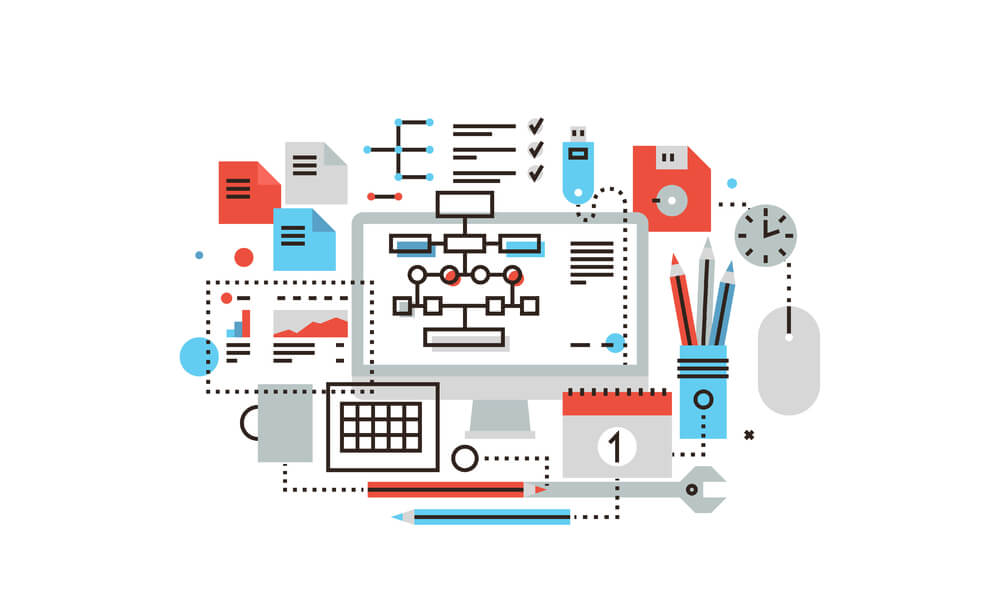
System Automation
Automation 8 min read

How System Automation Transforms Business Efficiency

Discover how leveraging automation technologies can streamline processes, reduce manual efforts, and achieve operational excellence across your organisation.

Read Article
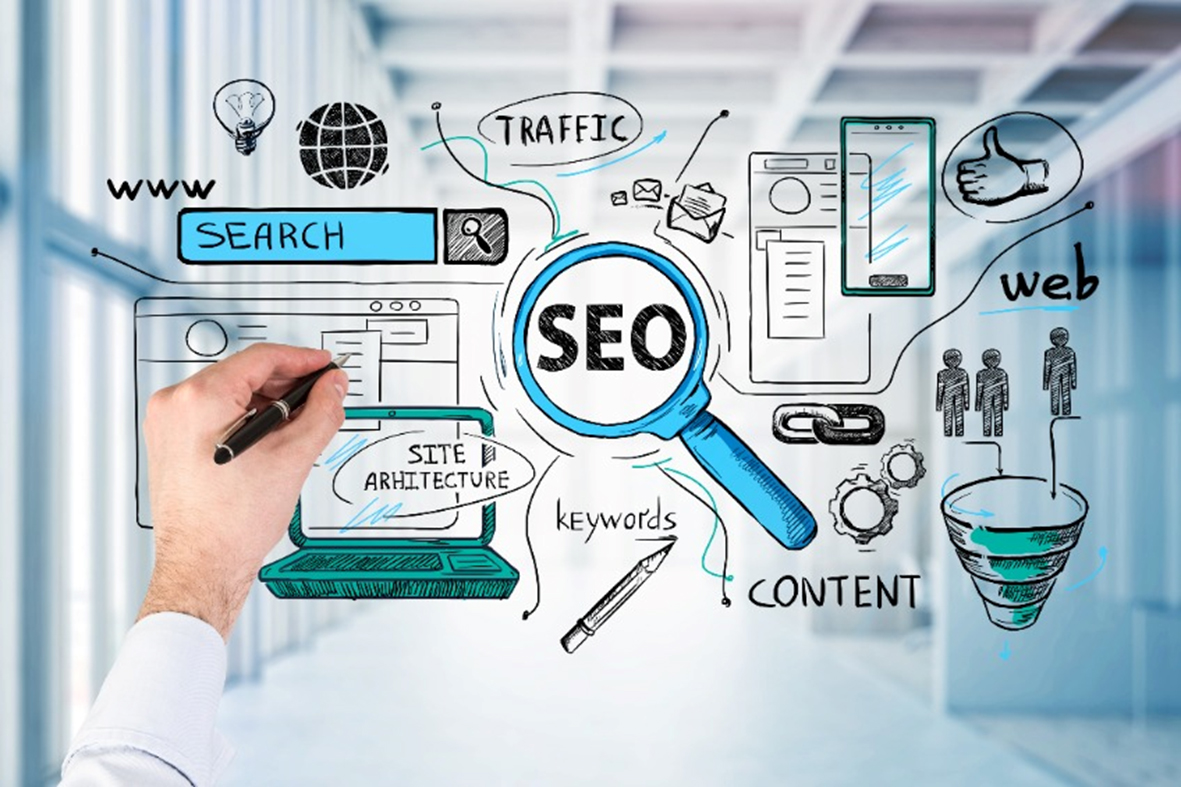
SEO Optimization
SEO 7 min read

SEO Optimization Strategies for Saudi Businesses in 2026

From keyword research to on-page optimisation, proven strategies to boost search engine rankings and drive organic traffic in the competitive Saudi digital market.

Read Article
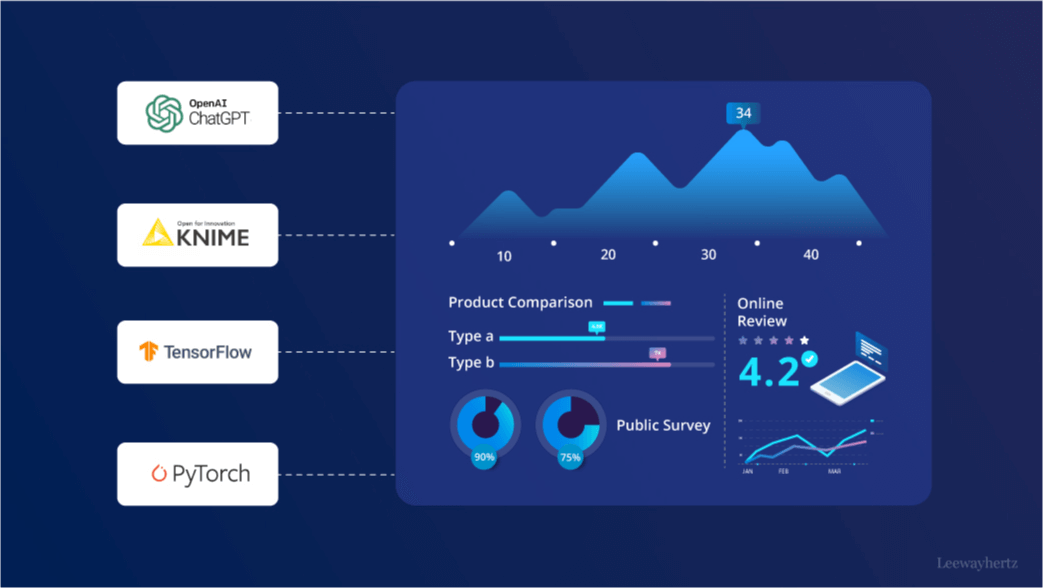
Data & AI Insights
Data & AI 9 min read

Unlocking Business Potential Through Data Analysis & AI Insights

Harness AI algorithms to gain valuable insights for informed decision-making and optimise business performance with data-driven strategies powered by Google Cloud.

Read Article

How System Automation Transforms Business Efficiency

February 18, 2026 8 min read By the NICITS Team

In an era of increasing operational complexity, Saudi businesses are under mounting pressure to do more with less. System automation has emerged as one of the most impactful levers available to organisations looking to scale their operations, reduce costs, and free their people to focus on high-value work. Yet for many businesses, the path to automation remains unclear.

This article explores what system automation really means, the technologies that power it, and how NICITS helps organisations in the Kingdom implement automation strategies that deliver measurable results.

What Is System Automation?

System automation refers to the use of software, AI, and integrated platforms to perform repetitive, rule-based tasks with minimal human intervention. It spans everything from scheduling automated backups and generating invoices to routing support tickets and triggering purchase orders when inventory drops below a threshold.

Automation is not about replacing people — it's about removing the friction that slows people down. When your team spends hours manually re-entering data between systems, chasing approvals over email, or generating the same weekly reports, that's friction. Automation eliminates it.

"Automation is not a cost-cutting exercise — it is an investment in your organisation's ability to operate at speed and scale without proportionally increasing headcount."

Key Automation Technologies in 2026

The automation landscape has matured significantly. Here are the key technologies driving impact for businesses today:

  • Robotic Process Automation (RPA): Software bots that mimic human interactions with desktop applications — logging in, extracting data, copying between systems, and filing reports. Ideal for legacy systems that lack modern APIs.
  • Workflow Automation Platforms: Tools like ERPNext automate business process flows — purchase orders triggering supplier notifications, sales orders generating picking lists, leave requests routing through approval chains — all without manual intervention.
  • AI-Powered Automation: Machine learning models that make intelligent decisions — classifying incoming support emails, predicting inventory demand, detecting anomalies in financial data, or personalising customer communications at scale.
  • API Integration & iPaaS: Connecting disparate systems (CRM, ERP, accounting, e-commerce) so data flows seamlessly without manual exports and imports — eliminating dual-entry errors and maintaining a single source of truth.
  • Scheduled & Event-Triggered Jobs: Server-side scripts and cloud functions (Google Cloud Functions, ERPNext Scheduled Jobs) that run at defined intervals or in response to specific events, like a customer placing an order or a sensor reading a threshold.

Business Benefits That Drive ROI

Measurable Outcomes
Up to 70% reduction in manual data entry time
Near-zero error rates on automated processes
Faster approval cycles and reduced processing time
Scalable operations without proportional headcount growth

Automation in Practice: ERPNext

One of the most impactful automation platforms we implement at NICITS is ERPNext — the open-source enterprise resource planning system built on the Frappe Framework. ERPNext brings end-to-end process automation to areas including:

  • Procurement automation: Auto-generate purchase orders when stock falls below reorder levels; send supplier RFQs automatically; reconcile GRNs against invoices.
  • HR & Payroll automation: Automatic salary slip generation, attendance integration, leave balance calculations, and payroll bank transfers — all with full audit trails.
  • Financial automation: Recurring invoices, payment reminders, bank reconciliation, and end-of-month journal entries — reducing your accounting team's manual workload significantly.
  • Customer communication automation: Order confirmation emails, shipment tracking notifications, and renewal reminders sent automatically based on CRM triggers.

Where to Start: The NICITS Automation Approach

The key to successful automation is starting with the right processes. At NICITS, we follow a structured discovery methodology:

  • Process mapping: Document your current workflows to identify bottlenecks, manual steps, and error-prone handoffs.
  • Prioritisation: Rank automation candidates by frequency, volume, error rate, and strategic value — focus first on high-impact, high-frequency processes.
  • Tooling selection: Match the right automation technology to each process — ERP workflows, API integrations, AI models, or scheduled jobs.
  • Pilot and measure: Implement automation for one process, measure the impact, refine, and then scale.

Automation is a journey, not a one-time project. The organisations that benefit most are those that build automation as a core operational capability — continuously identifying new opportunities to reduce friction and increase velocity.

Ready to Automate Your Operations?

NICITS specialises in ERP implementation, workflow automation, and cloud integrations. Our certified engineers will map your processes and design an automation strategy tailored to your business.

Talk to Our Team

SEO Optimization Strategies for Saudi Businesses in 2026

February 5, 2026 7 min read By the NICITS Team

The digital landscape in Saudi Arabia has undergone a dramatic transformation. With Vision 2030 accelerating digital adoption across every sector, the competition for online visibility has never been more intense. Yet many businesses in the Kingdom are still treating SEO as an afterthought — missing enormous opportunities to attract qualified customers at the moment they're actively searching.

This guide cuts through the noise to give you actionable SEO strategies that are proven to work in the Saudi market in 2026.

The Saudi SEO Landscape in 2026

Saudi Arabia has one of the highest internet penetration rates in the Arab world, with over 95% of the population online. Google dominates search with over 93% market share. Mobile-first usage is the norm — over 70% of searches happen on mobile devices, with voice search rapidly growing through Arabic-language queries on Google Assistant and Siri.

For Saudi businesses, this means SEO is not optional — it is a fundamental component of your marketing infrastructure. A well-optimised website can deliver a consistent stream of qualified traffic at a fraction of the cost of paid advertising.

"In Saudi Arabia's digital economy, your Google ranking is your storefront. Businesses that invest in SEO today are building a compounding asset that will deliver returns for years."

Technical SEO: The Non-Negotiable Foundation

No content strategy will save a technically broken website. Before anything else, ensure your site has these fundamentals in place:

  • Core Web Vitals: Google's ranking signals measure page loading speed (LCP), interactivity (INP), and visual stability (CLS). Target LCP under 2.5 seconds and CLS below 0.1 — especially on mobile.
  • Mobile-first indexing: Google indexes the mobile version of your site first. If your mobile experience is poor, your rankings will suffer regardless of your desktop site quality.
  • HTTPS and security: All pages must be served over HTTPS. Mixed-content warnings and insecure pages are penalised and erode visitor trust.
  • Crawlability: Ensure your sitemap is submitted to Google Search Console, robots.txt is correctly configured, and important pages are not accidentally blocked from crawling.
  • Structured data (Schema.org): Implement structured data markup for your business (LocalBusiness, Product, FAQ, Article) to earn rich results in Google search — increasing click-through rates significantly.

Local SEO: Dominating Saudi Search Results

For businesses serving customers in specific cities — Riyadh, Jeddah, Dammam — local SEO is your highest-leverage activity. Here's what moves the needle:

  • Google Business Profile optimisation: Claim and fully complete your Google Business Profile with accurate address, phone, hours, services, and regular photo updates. Actively solicit and respond to reviews.
  • NAP consistency: Your business Name, Address, and Phone number must be identical across your website, Google Business Profile, and all online directories.
  • Local keyword targeting: Include location-specific keywords — "IT solutions Riyadh", "network installation Saudi Arabia" — in your page titles, meta descriptions, headings, and body content.
  • Arabic-language pages: If you serve Arabic-speaking customers, invest in properly written Arabic content — not machine translation. Arabic pages rank independently in Arabic-language searches.
SEO Priority Checklist
Google Business Profile fully optimised
Core Web Vitals passing on mobile
Keyword research completed for target pages
Structured data markup implemented
Arabic content pages created
Google Search Console actively monitored

On-Page SEO: Content That Ranks and Converts

Every page on your website has the potential to rank for relevant search queries. Maximise that potential with:

  • Keyword intent matching: Match your content format to the searcher's intent. Informational queries need guides and articles; commercial queries need comparison pages and case studies; transactional queries need clear service/product pages with strong CTAs.
  • Title tags and meta descriptions: Write unique, compelling title tags (50–60 characters) and meta descriptions (150–160 characters) for every page — these directly influence click-through rates from search results.
  • Header hierarchy: Use H1 for your primary keyword, H2s for major sections, and H3s for sub-points. This structure helps Google understand your content's organisation.
  • Internal linking: Link related pages together using descriptive anchor text. A well-structured internal linking strategy distributes page authority and helps Google discover all your content.

Building Authority Through Links and Content

Google's ranking algorithm weighs the quality and quantity of links pointing to your website (backlinks) as a signal of authority and trustworthiness. For Saudi businesses:

  • Publish original research, industry reports, or thought leadership content that others will naturally reference and link to.
  • Contribute guest articles to Saudi business publications and tech platforms.
  • Build relationships with local trade associations, chambers of commerce, and business directories for citation links.
  • Create genuinely useful tools, calculators, or guides that earn organic links over time.

Improve Your Search Rankings with NICITS

Our design team offers full technical SEO audits, keyword strategy, and on-page optimisation — tailored specifically for Saudi businesses competing in English and Arabic search results.

Explore SEO Services

Unlocking Business Potential Through Data Analysis & AI Insights

January 22, 2026 9 min read By the NICITS Team

Data has become the defining competitive asset of the 21st century. But for most businesses — even those sitting on vast amounts of operational data — the full potential of that information remains untapped. Meanwhile, artificial intelligence tools have matured to the point where capabilities once reserved for technology giants are now accessible to businesses of every size.

This article explores how data analysis and AI can unlock measurable business value, the Google Cloud technologies that power these capabilities, and the practical steps Saudi organisations can take to begin their data-driven transformation.

Why Data Strategy Can No Longer Wait

Every business transaction generates data: a purchase order created in your ERP, a support ticket raised by a customer, a delivery confirmed by your logistics partner. Most of this data sits in siloed systems, generating zero insight. The organisations winning in 2026 are those that have connected their data sources, built the analytical capability to extract patterns, and used AI to make predictions that inform faster, better decisions.

The competitive gap between data-mature and data-immature organisations is widening rapidly. A manufacturer that can predict equipment failure before it happens avoids costly downtime. A retailer that can forecast demand with accuracy optimises inventory and cash flow. A services firm that understands customer churn patterns can intervene before losing a client.

"Data without analysis is just noise. Analysis without action is just reporting. The goal is a system where data automatically surfaces insights that drive decisions — that's where AI comes in."

The Data Foundation: From Raw Data to Business Intelligence

Before AI can deliver value, you need a solid data foundation. This means:

  • Data consolidation: Bringing data from ERP, CRM, spreadsheets, e-commerce platforms, and third-party systems into a centralised data warehouse — typically Google BigQuery for organisations using the Google Cloud stack.
  • Data quality management: Cleaning, standardising, and validating data so it can be trusted. Garbage in, garbage out — AI models trained on poor-quality data produce unreliable outputs.
  • Data pipeline automation: Building ETL (extract, transform, load) pipelines using Google Dataflow or Cloud Functions that automatically update your data warehouse as transactions occur in source systems.
  • Dashboards and reporting: Turning raw data into interactive dashboards (using Looker Studio, Google Sheets, or BigQuery BI Engine) that give business users real-time visibility into KPIs — without needing to write SQL.

Google Cloud AI: Making Intelligence Accessible

Google Cloud offers a comprehensive suite of AI and machine learning services that NICITS deploys for clients across sectors:

  • Vertex AI: Google's unified ML platform for training, deploying, and managing machine learning models — from demand forecasting to customer segmentation to predictive maintenance.
  • Gemini (GenAI): Google's family of large language models (LLMs), accessible via API, enabling businesses to build AI assistants, document summarisation tools, intelligent search, and automated report generation on top of their own data.
  • Document AI: Extract structured data from invoices, contracts, and forms using pre-trained or custom-trained document processing models — eliminating manual data entry from paper-based processes.
  • BigQuery ML: Run machine learning models directly inside your data warehouse using standard SQL — no Python expertise required — making ML accessible to data analysts without a data science background.
AI Use Cases by Business Function
Sales forecasting and pipeline analytics
Automated invoice processing
Inventory demand forecasting
AI customer service assistants
Equipment predictive maintenance
Fraud and anomaly detection

Prompt Engineering: Getting the Most From GenAI

Generative AI tools like Gemini are only as effective as the prompts and system instructions that guide them. Prompt engineering — the discipline of crafting effective inputs to AI models — is rapidly becoming a core business skill.

NICITS's certified Google Cloud engineers specialise in:

  • Designing system prompts that constrain AI behaviour to your business domain, terminology, and tone of voice.
  • Building Retrieval-Augmented Generation (RAG) pipelines that ground AI responses in your organisation's own documents and knowledge bases.
  • Fine-tuning LLMs on domain-specific datasets for specialised applications like technical documentation search or regulatory compliance checking.
  • Evaluating model outputs for accuracy, safety, and alignment with business requirements before deployment.

A Practical Roadmap for Data-Driven Transformation

For organisations just beginning their data journey, here is a pragmatic phased approach:

  • Phase 1 – Foundation (Months 1–3): Audit existing data sources, identify critical business questions that data should answer, and establish a central data repository (BigQuery). Begin with a single domain — finance or sales — to build early wins.
  • Phase 2 – Visibility (Months 3–6): Build dashboards that give leadership real-time visibility into business performance. Connect operational systems (ERP, CRM) to the data warehouse via automated pipelines.
  • Phase 3 – Intelligence (Months 6–12): Implement predictive models for high-value use cases (demand forecasting, churn prediction). Introduce AI-powered automation for document processing or customer interactions.
  • Phase 4 – Optimisation (Ongoing): Continuously expand data coverage, refine models, and embed AI-driven insights into operational workflows — making intelligence a core part of how decisions are made at every level.

Start Your Data & AI Journey with NICITS

Our certified Google Cloud engineers will assess your current data maturity, identify your highest-value AI opportunities, and build the infrastructure to turn your data into a competitive advantage.

Explore Google Cloud Services